Environmental health
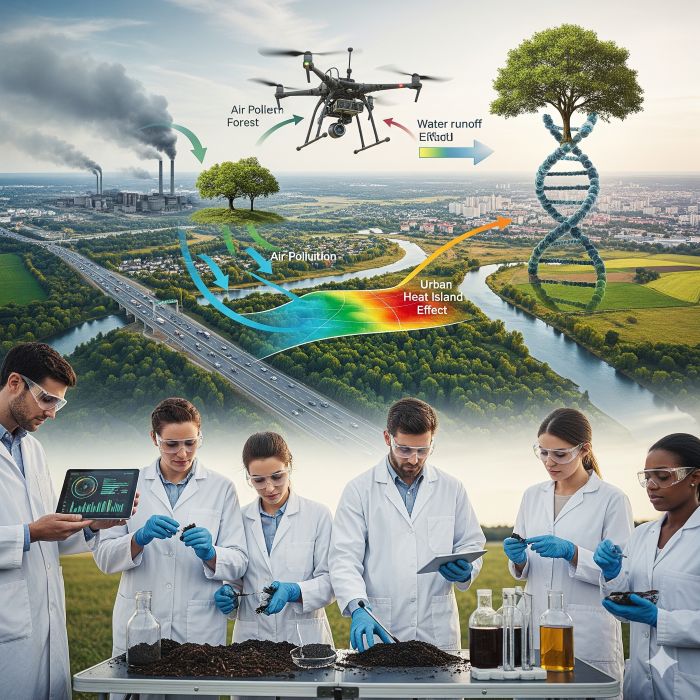
Environmental health is a specialized field dedicated to understanding the relationship between human health and the external environment. Its primary objective is the prevention of illness and mortality by analyzing how both external surroundings and individual behavioral choices impact well-being. The field categorizes environmental threats through two primary lenses: socioeconomic origin (traditional versus modern hazards) and the nature of the hazard itself (biological, chemical, and physical). A critical takeaway from the source material is the interconnected nature of these hazards, where different categories often overlap to create complex health risks.
The Scope and Objectives of Environmental Health
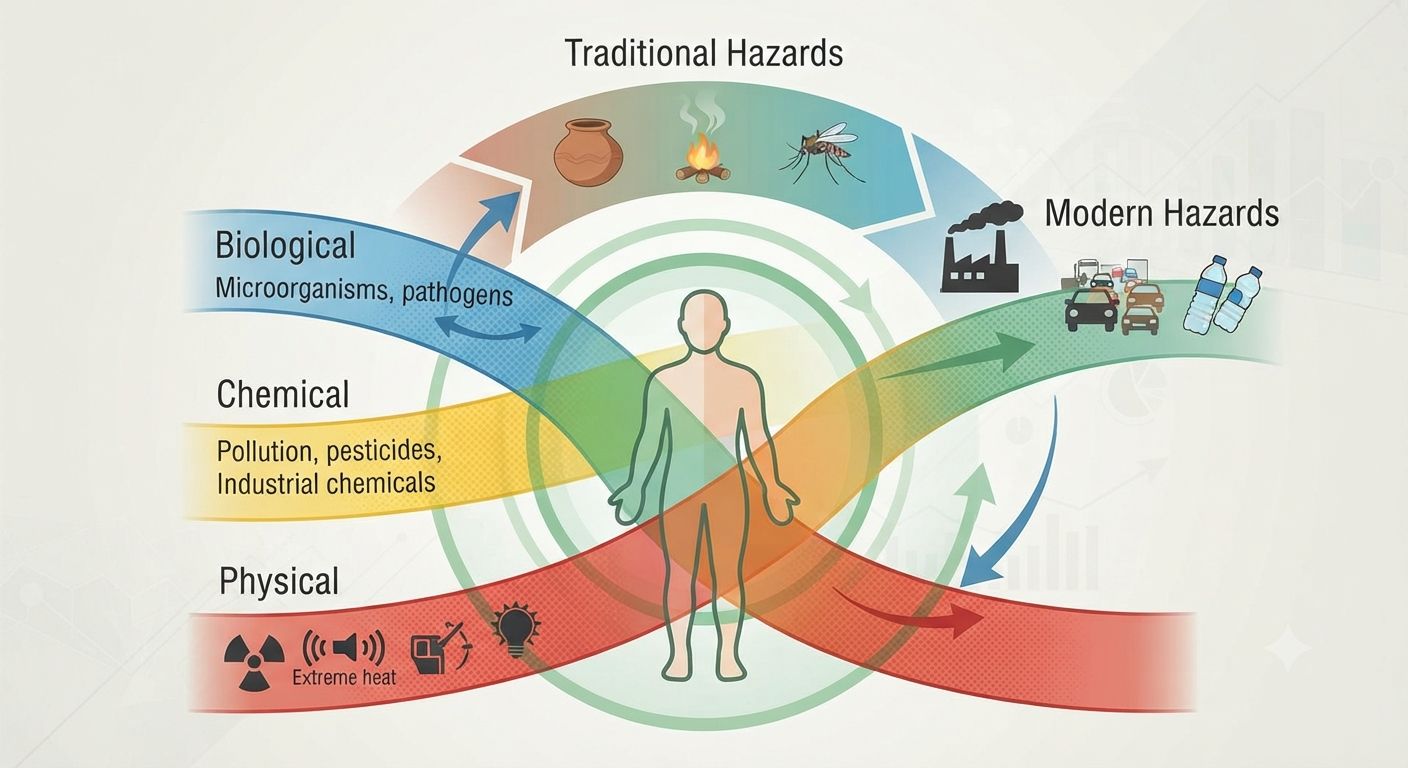
The study of environmental health is defined by its preventative focus. By identifying and mitigating risks before they result in clinical outcomes, the field seeks to safeguard public health. The scope of this discipline includes:
- Environmental Influence: Assessing how the physical, social, and built surroundings affect human health.
- Behavioral Impact: Evaluating how personal choices interact with the environment to influence health outcomes.
- Primary Goal: The reduction and prevention of sickness and death through proactive environmental management.
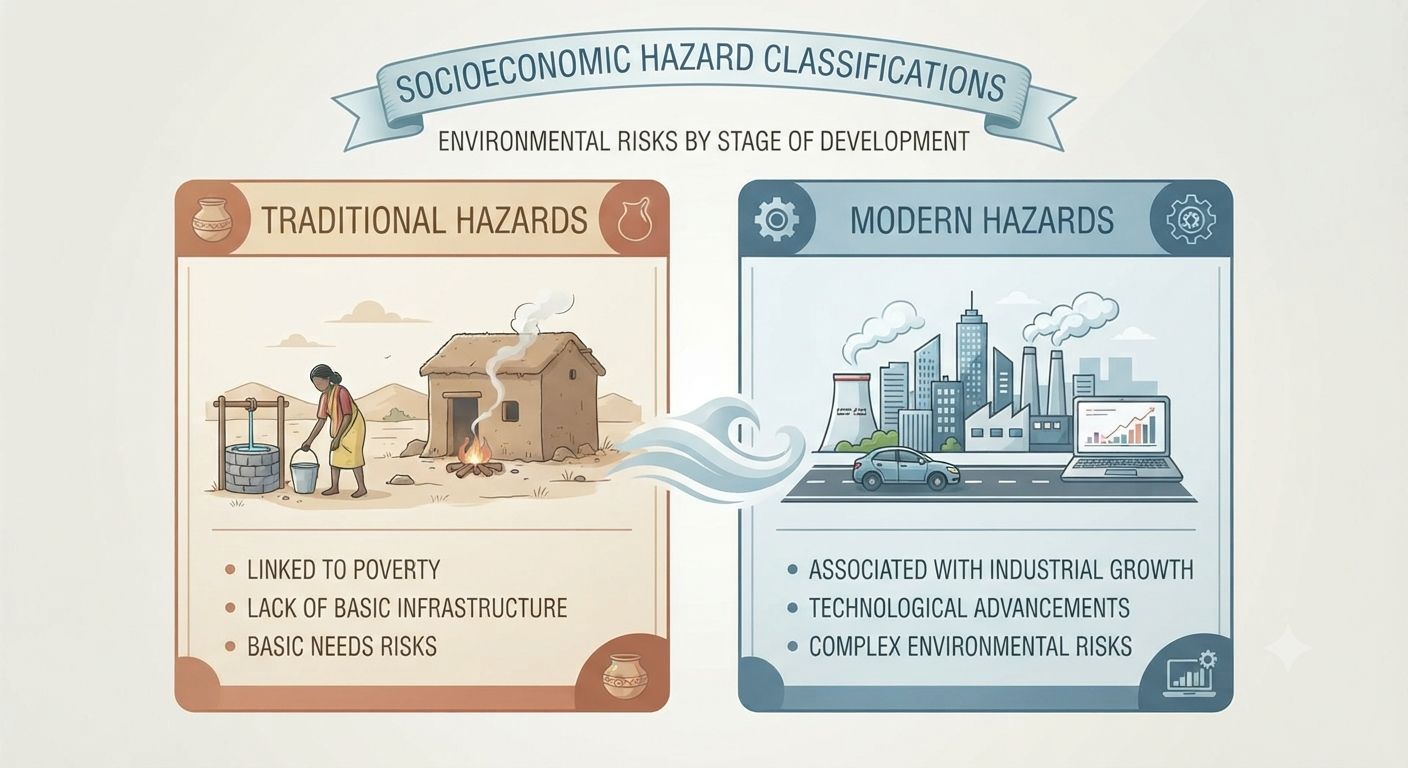
Socioeconomic Hazard Classifications
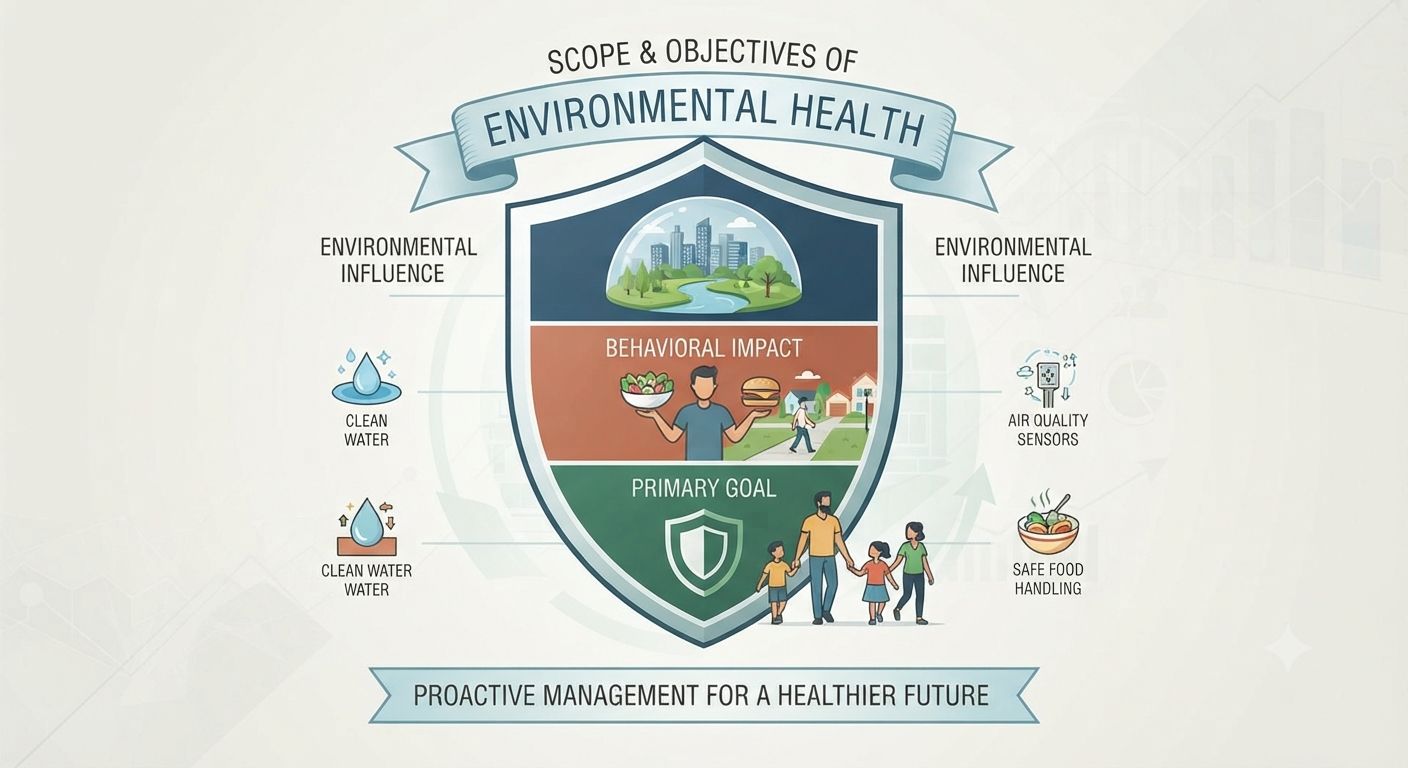
Environmental hazards are frequently distinguished by their association with different stages of economic and industrial development:
- Traditional Hazards: These risks are predominantly linked to poverty and a lack of basic developmental infrastructure.
- Modern Hazards: These risks are associated with industrial growth and the technological advancements of developed societies.
Categorization by Hazard Type
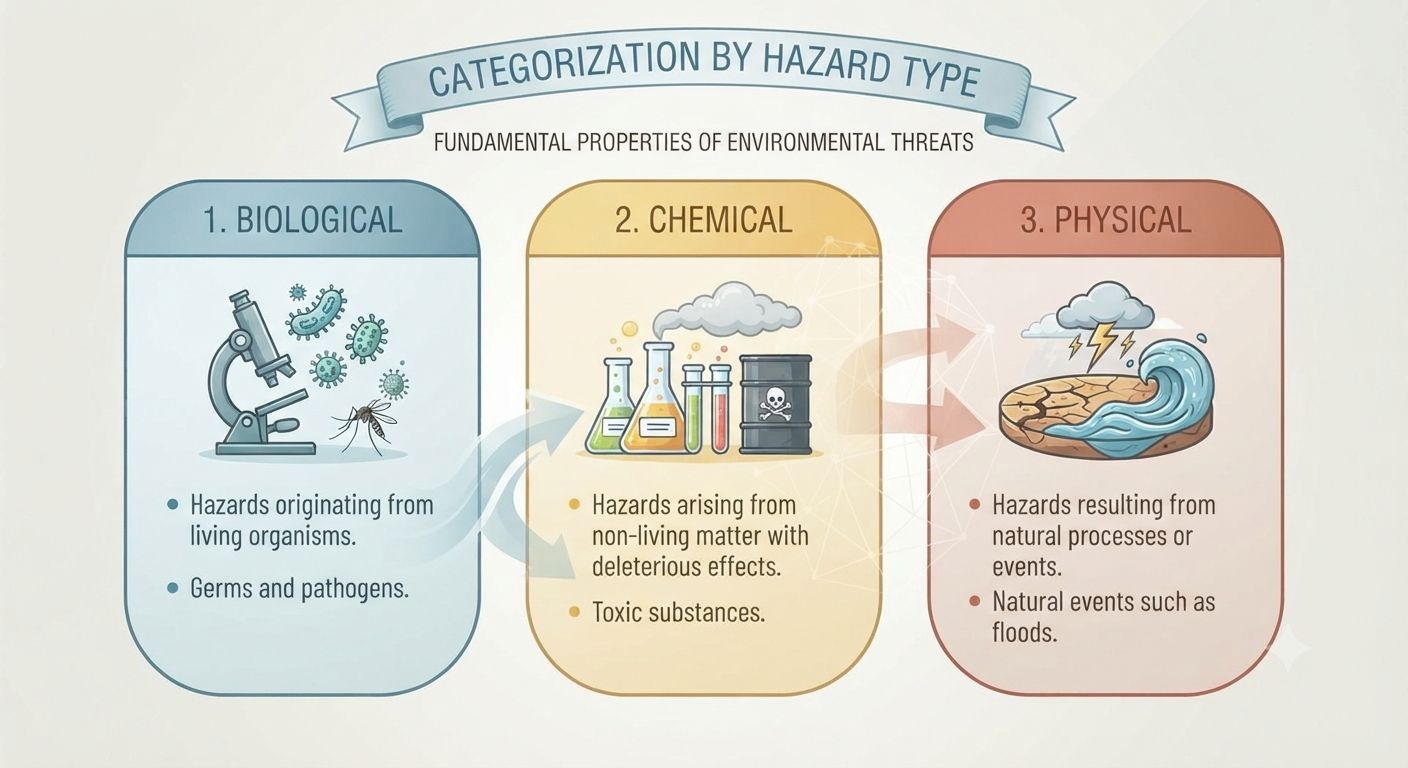
Environmental health threats are organized into three distinct groups based on their fundamental properties. While distinct, these categories are not mutually exclusive.
Hazard Category:
- Biological: Hazards originating from living organisms. Germs and pathogens.
- Chemical: Hazards arising from non-living matter with deleterious effects. Toxic substances
- Physical: Hazards resulting from natural processes or events. Natural events such as floods.
The Overlap of Hazards
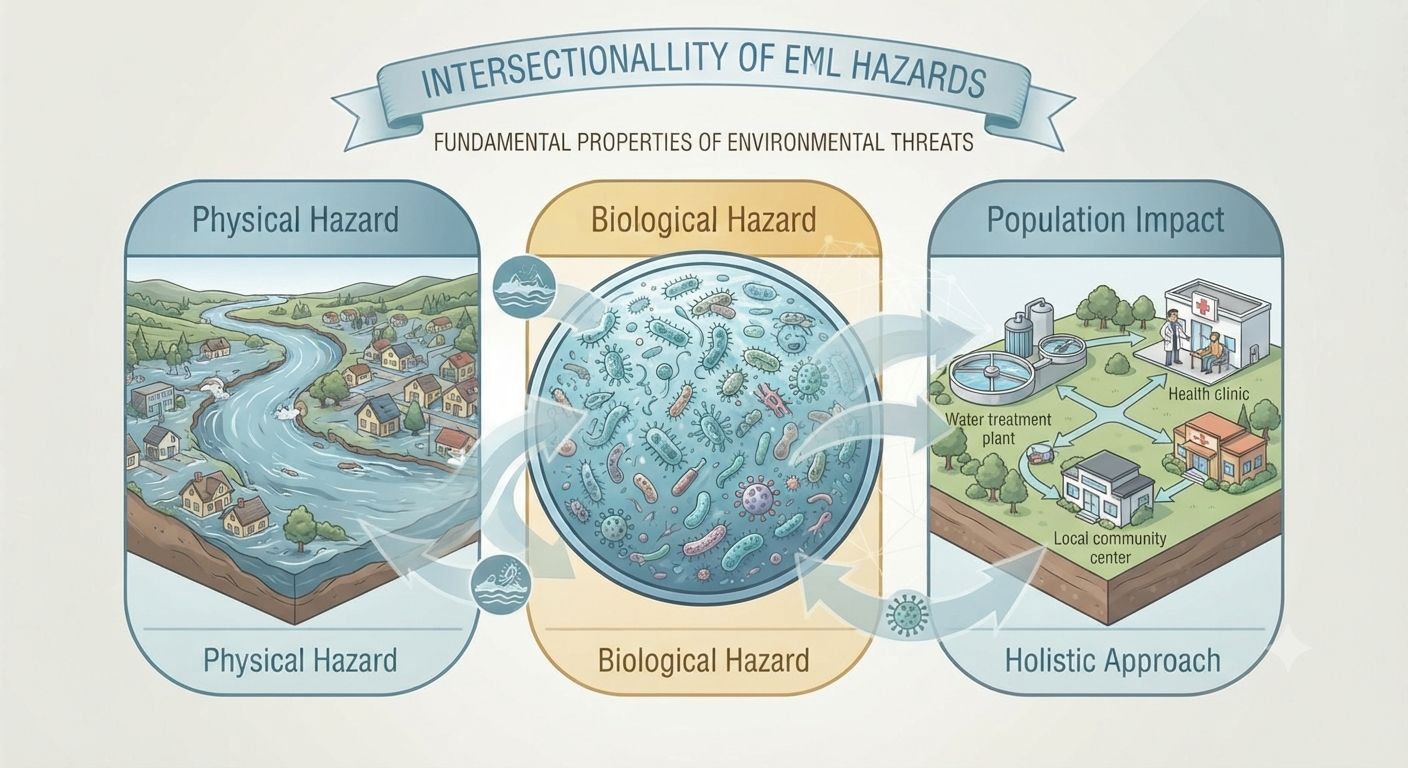
A defining characteristic of environmental hazards is their tendency to intersect. The classification system recognizes that one type of hazard can facilitate or exacerbate another. For instance, a physical hazard such as a flood does not act in isolation; it can serve as a delivery mechanism for a biological hazard by spreading germs throughout a populated area. This intersectionality requires a holistic approach to environmental health monitoring and intervention.