Sustainability and Environmental Justice
The Framework of Sustainability
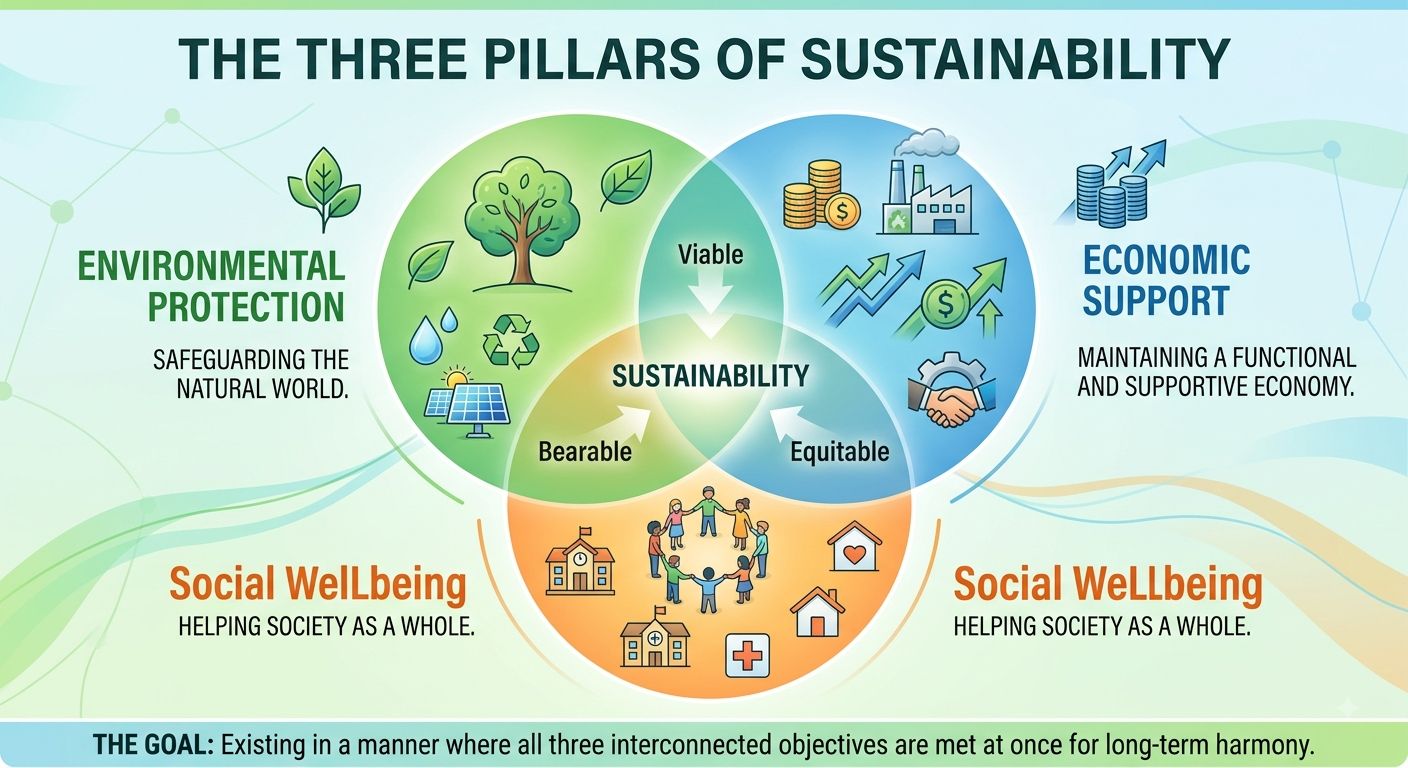
Sustainability is categorized as a tripartite objective that seeks to balance three distinct but interconnected pillars:
- Environmental Protection: Safeguarding the natural world.
- Economic Support: Maintaining a functional and supportive economy.
- Social Wellbeing: Helping society as a whole.
The goal of sustainability is to exist in a manner where all three of these objectives are met at once.
Drivers of Unsustainable Patterns
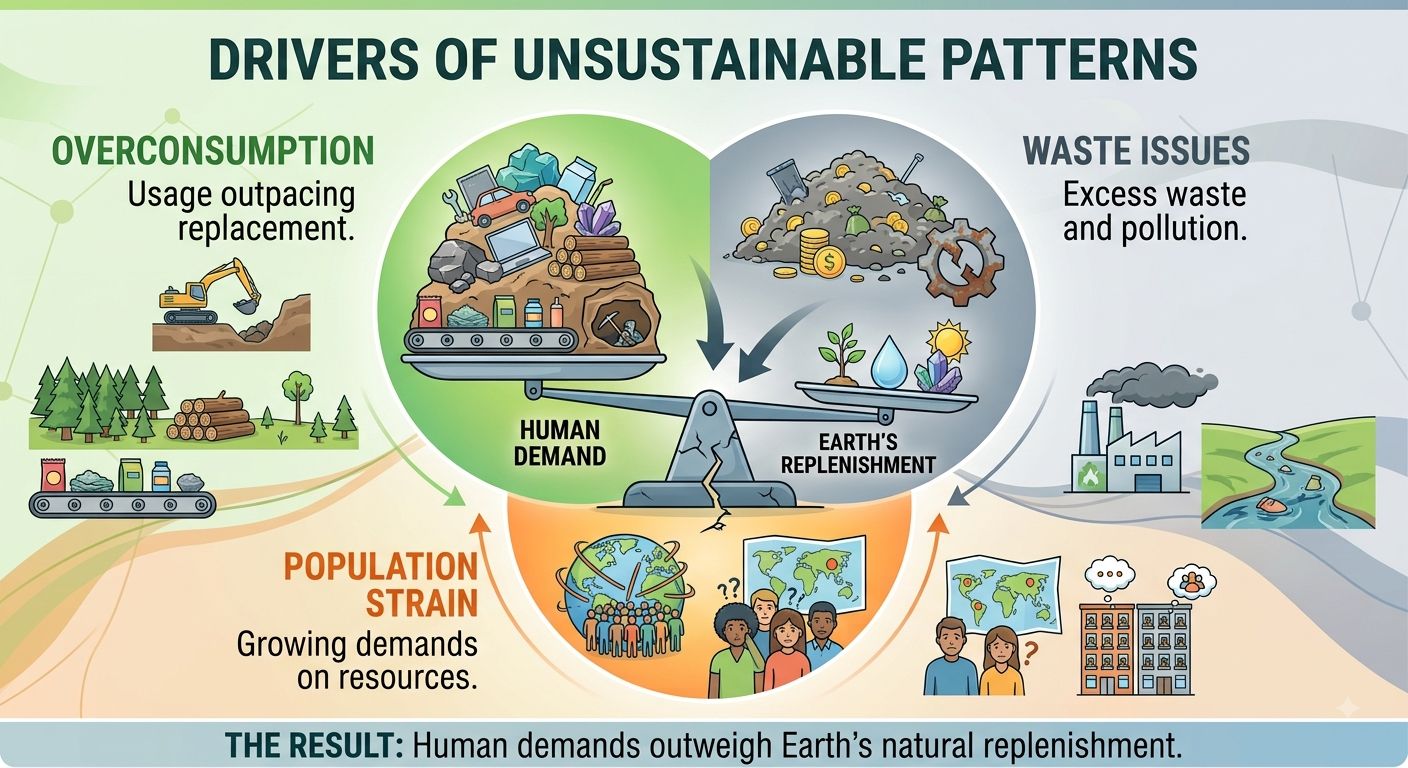
The document identifies a critical imbalance between human consumption and the Earth's natural replenishment cycles. The primary factors contributing to this instability include:
- Overconsumption: Resource usage rates are currently faster than the Earth’s ability to replace them.
- Population Pressures: A growing global population increases the strain on available resources.
- Waste Management: The production of too much waste contributes to the degradation of the environment and the depletion of natural assets.
Principles of Environmental Justice
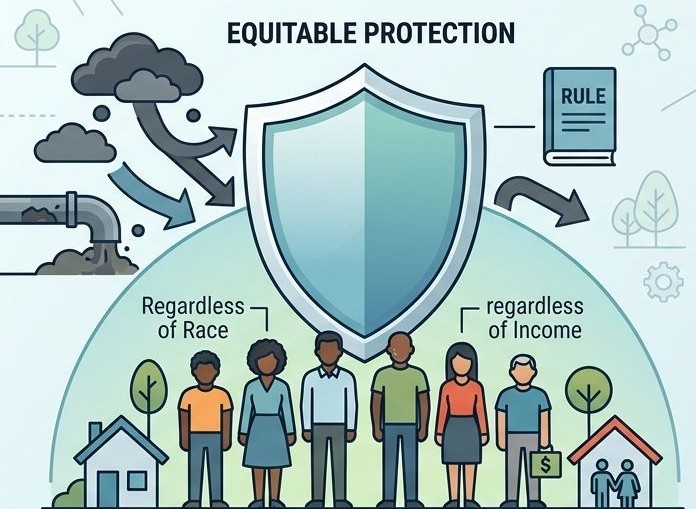
Environmental justice is established as a moral and regulatory principle focused on equitable protection. the core rule of environmental justice is that every individual should be protected from pollution, irrespective of their racial background or income level.
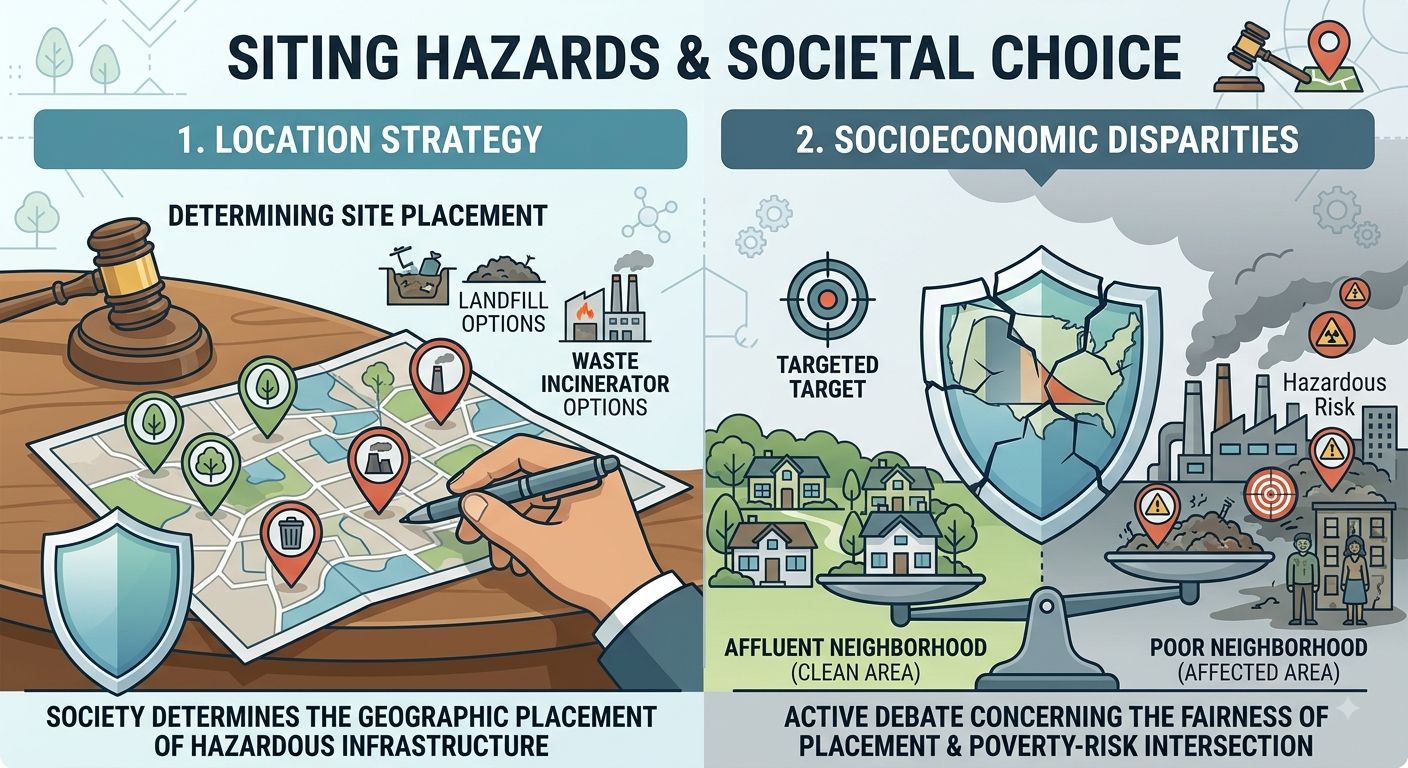
Siting Hazards and Societal Choice
A significant portion of the debate surrounding environmental justice concerns how society determines the geographic placement of hazardous infrastructure.
- Location Strategy: Society must make choices regarding where to locate trash and waste sites.
- Socioeconomic Disparities: There is an active debate concerning the fairness of these choices, specifically focusing on whether poor neighborhoods are unfairly targeted for the placement of environmental hazards. This raises questions about the intersection of poverty and environmental risk exposure.